
Introduction
For years, chatbots were seen as a big-company luxury — the kind of tech used by banks, airlines, or SaaS giants. But in 2025, that’s changed dramatically.
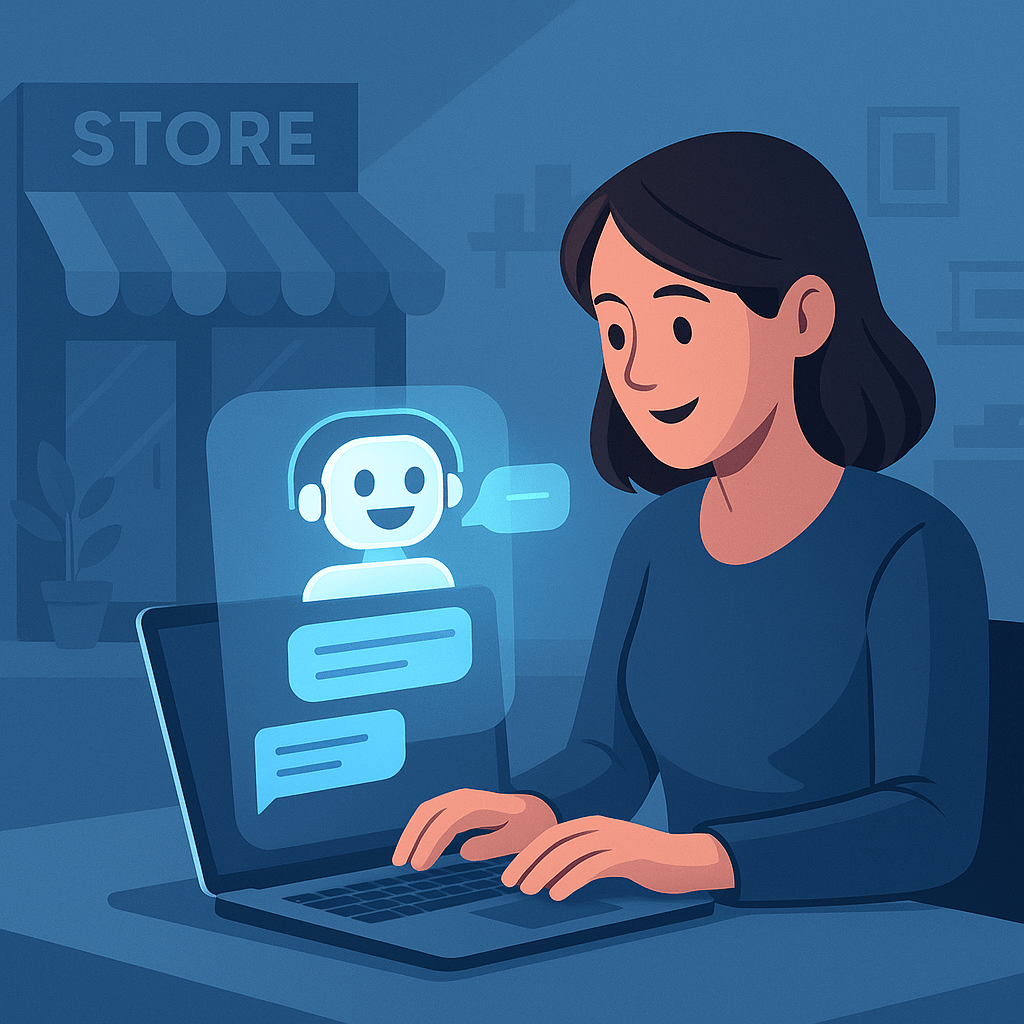
Today, small businesses — from local bakeries to online boutiques — are using AI-powered chatbots to boost sales, nurture leads, and deliver instant customer experiences that rival enterprise brands.
Whether you’re a solo entrepreneur, an e-commerce owner, or a growing agency, AI chatbots are now one of the smartest and most affordable ways to automate customer engagement.
So, how exactly are small businesses using chatbots to increase conversions and revenue? Let’s explore what’s working right now — and how you can implement it without breaking your budget.
1️⃣ What Are Chatbots and Why They Matter for Sales
A chatbot is a digital assistant that communicates with customers through text or voice — answering questions, offering recommendations, and even processing transactions.
But in 2025, chatbots are no longer limited to basic “FAQ” responses.
Modern chatbots use AI, natural language processing (NLP), and real-time analytics to handle full sales conversations.
How AI Chatbots Work
1️⃣ A visitor lands on your website or social media page.
2️⃣ The chatbot greets them with a friendly message like “Hey there! Looking for something specific?”
3️⃣ Based on their response, it recommends products or services.
4️⃣ It answers objections, provides offers, and guides the customer to checkout.
💡 Pro Tip:
The best chatbots act like sales reps, not scripts. They listen, personalize, and lead users through a journey — exactly what great human salespeople do.
2️⃣ Why Chatbots Are a Game-Changer for Small Businesses
Small businesses often struggle with limited staff, inconsistent response times, and missed opportunities outside business hours. Chatbots solve all three — at once.
A. 24/7 Availability
Chatbots don’t sleep. They greet customers, answer FAQs, and handle purchases at any hour — capturing sales while you rest.
B. Lead Qualification
AI chatbots can ask pre-qualifying questions (“What service are you interested in?”) and tag leads by intent or budget before your human team even replies.
C. Personalized Recommendations
With access to your product catalog or CRM, chatbots can recommend items based on preferences or past purchases — driving higher order values.
D. Lower Costs
Instead of hiring additional support reps, you pay a fraction of that cost for automation that never calls in sick or takes vacations.
E. Data Collection
Every conversation generates valuable insights — what customers ask, what stops them from buying, and what they actually want.
💡 Pro Tip:
For small businesses, chatbots aren’t about replacing people — they’re about extending your team’s capacity.
3️⃣ The Direct Impact of Chatbots on Sales
Let’s break down how AI chatbots actually convert conversations into revenue.
1. Lead Capture
AI chatbots automatically collect names, emails, or phone numbers from visitors in a friendly way — no boring forms.
Example:
“Hey 👋 Want a free quote? Drop your email and I’ll get the estimate ready instantly.”
2. Upselling & Cross-Selling
AI can recognize when a user shows interest in a product and offer upgrades or add-ons.
Example:
“You added the 60-day plan — would you like to save 10% by upgrading to the 90-day pack?”
3. Abandoned Cart Recovery
Chatbots send gentle reminders like:
“Looks like you left something behind 👀 Want me to reserve it for you before it sells out?”
4. Real-Time Recommendations
They suggest complementary products during checkout — much like a helpful in-store assistant.
5. Instant Payments
Integrated chatbots can process secure payments directly within the chat window, reducing friction and drop-offs.
💡 Pro Tip:
AI bots don’t just talk — they guide action. Every message has one purpose: move users closer to conversion.
4️⃣ Real-World Examples of Small Business Success
Example 1: Local Bakery Increases Orders by 35%
A small bakery in Mumbai integrated a WhatsApp chatbot that lets customers pre-order cakes and track deliveries.
Results:
- 35% increase in pre-orders
- 20% fewer phone calls
- 50% faster customer responses
Example 2: E-Commerce Boutique Doubles Conversions
A Shopify store selling handmade jewelry used a chatbot that offered real-time style recommendations.
Results:
- 2× conversion rate
- 28% increase in average order value
- 24/7 customer engagement without hiring more staff
Example 3: Fitness Studio Boosts Membership Signups
A fitness studio deployed an Instagram DM chatbot that responded instantly to “How do I join?” inquiries.
Results:
- 45% more leads converted
- Human team saved 25 hours/month
- Average response time dropped from 6 hours to 10 seconds
💡 Pro Tip:
Pick one platform where your audience spends time (Instagram, WhatsApp, website) — and automate that channel first.
5️⃣ Popular Chatbot Platforms for Small Businesses
You don’t need a custom-coded bot. The market is full of user-friendly tools perfect for small businesses.
Top Picks (2025)
✅ Tidio – Simple drag-and-drop interface for e-commerce.
✅ Manychat – Great for Instagram and Facebook automations.
✅ Chatbase – GPT-powered chatbots trained on your content.
✅ Botpress – Customizable AI for advanced logic.
✅ HubSpot Chatbot Builder – For CRM-integrated conversations.
✅ Flow XO – Affordable all-in-one automation suite.
💡 Pro Tip:
Choose based on your goal — not just features. For sales-focused chatbots, prioritize lead capture, personalization, and payment integration.
6️⃣ The Perfect Chatbot Strategy for Sales Growth
To get measurable results, treat your chatbot like a digital sales rep — not a widget.
Step 1: Define Your Objective
Is your goal to get more leads, increase cart conversions, or reduce support time?
Step 2: Build a Conversational Flow
Map questions and possible responses. Example:
- “Hi there! Looking for something specific?”
- “Yes → Recommend products”
- “Just browsing → Offer bestsellers or new arrivals”
Step 3: Add Personality
Make your chatbot reflect your brand tone — friendly, helpful, or expert.
Example:
If your brand is playful, let your chatbot say, “I’ve got deals hotter than your morning coffee ☕.”
Step 4: Integrate Payments or Booking
Link with Stripe, Razorpay, or WooCommerce to allow seamless transactions.
Step 5: Train & Refine
Use your customer chat history to improve accuracy. AI gets smarter the more it learns.
💡 Pro Tip:
Keep it short — customers love clarity. Aim for 2–3 interactions before the CTA (buy, book, or contact).
7️⃣ Common Mistakes to Avoid
Even great bots can fail if implemented poorly. Watch out for these traps:
❌ Over-Automating
If your chatbot never hands over to a human, frustrated users will leave.
❌ Ignoring Tone
A robotic voice kills conversions. Always match your brand’s personality.
❌ Missing Follow-Up
A chatbot conversation without post-chat email or offer is a lost opportunity.
❌ Lack of Analytics
Without measuring success (conversion rate, response time, drop-off rate), you can’t optimize.
💡 Pro Tip:
Pair your chatbot with CRM data to follow up with qualified leads automatically.
8️⃣ Integrating Chatbots into Multi-Channel Marketing
Chatbots aren’t just for websites. Small businesses now use them across multiple channels to unify customer experiences.
Where to Deploy
- 🌐 Website: Greet new visitors, capture emails.
- 💬 Instagram DM: Automate replies to comments or stories.
- 📱 WhatsApp: Send order updates or offers directly.
- 💻 Facebook Messenger: Reconnect with old leads.
- 🛒 Shopify/WooCommerce: Provide cart assistance in real time.
Example Flow
Customer comments “price?” → chatbot replies instantly → offers coupon → redirects to checkout.
💡 Pro Tip:
Use consistent brand tone and quick-action buttons across every channel.
9️⃣ Hiring Experts to Set Up Your Chatbot
While DIY platforms are great, hiring a professional can help you launch faster with better results.
Platforms to Hire From
- Fiverr: Ideal for small-business chatbot setup, tone training, and API integration.
- Upwork: Good for ongoing automation maintenance.
- Toptal: Great for advanced enterprise setups.
💡 Why Fiverr Leads Here:
You’ll find top-rated experts who handle end-to-end delivery — from bot design to deployment — often in just 3–5 days.
Checklist Before Hiring
✅ Ask for chatbot examples they’ve built.
✅ Request a “conversation map” before launch.
✅ Test their understanding of your target audience.
✅ Ask for analytics setup (so you can measure ROI).
💡 Pro Tip:
Don’t pay for complexity — focus on conversions. A simple chatbot that gets leads is better than an overengineered one.
10️⃣ Real Data: Chatbots and ROI
Still skeptical? Let’s look at real numbers.
📈 HubSpot Research:
82% of consumers expect instant replies — chatbots meet that expectation better than email or phone.
💰 Drift Study:
Businesses using chatbots saw 67% higher conversion rates from website visitors.
🕐 Salesforce Report:
AI chatbots saved companies an average of 2,500+ staff hours per year.
For small businesses, this translates directly to fewer missed sales, faster support, and higher customer satisfaction.
💡 Pro Tip:
Set clear KPIs — conversion rate, lead volume, and response time — and measure monthly improvement.
An Overview of What This Tip Is
Chatbots are not futuristic anymore — they’re practical, affordable, and proven.
For small businesses, they combine the benefits of 24/7 availability, personalized selling, and cost efficiency — turning casual visitors into paying customers.
The key isn’t to build the most advanced AI — it’s to create the most useful and human-like one for your audience.
A Clear Benefit
By implementing chatbots, small businesses achieve:
✅ More sales through automation
✅ Shorter sales cycles and instant support
✅ Better customer engagement across platforms
✅ Higher conversion rates with personalized offers
✅ Reduced staff workload and increased ROI
The right chatbot doesn’t replace your sales team — it extends it.
Action Items
1️⃣ List your top 5 most common customer questions.
2️⃣ Choose one chatbot platform (Tidio, ManyChat, Chatbase).
3️⃣ Create your greeting and CTA flows.
4️⃣ Integrate with CRM or payment gateways.
5️⃣ Run a 30-day test with live users.
6️⃣ Analyze conversations and update flows weekly.
7️⃣ Scale your bot across multiple channels.
💡 Bonus:
A/B test two different opening lines — small tone changes can double your engagement rate.
The Future of Chatbots in Small Business (2025–2030)
Chatbots will evolve from reactive responders to proactive sales assistants.
Trends to Watch
🚀 Predictive Selling: Bots recommending products before customers even ask.
🧠 AI Emotion Recognition: Adjusting tone based on user sentiment.
💬 Voice Commerce: Customers buying via conversational AI.
🔗 Integrated Loyalty Programs: Bots managing rewards and referrals.
📊 Sales Insights Dashboards: AI summarizing customer feedback in real time.
In short — chatbots are becoming the new frontline of digital sales.
💡 Pro Tip:
Adopt early. Businesses that integrate chatbots in 2025 will have stronger data, loyal audiences, and higher automation ROI by 2030.
Conclusion
AI chatbots have officially moved from “nice-to-have” to “must-have.”
They don’t just make customer service easier — they drive sales, reduce costs, and build better customer relationships.
Whether you’re a boutique, a service agency, or an e-commerce store, implementing a chatbot is one of the most impactful growth moves you can make this year.
At InnovaByte AI, we help businesses unlock the true power of AI tools to grow smarter, not harder.
And if you’re ready to take your next step, you can find certified chatbot builders and AI automation experts on Fiverr, who can set up your system from strategy to execution — fast, affordable, and tailored to your brand.
Because in today’s market, the question isn’t “Should I use a chatbot?” —
it’s “How fast can I launch one before my competitors do?”